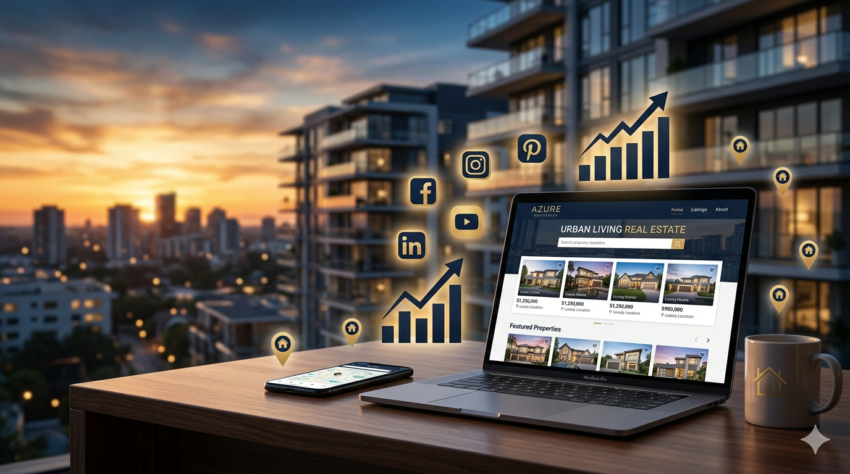
The real estate market does not wait. Every day, thousands of buyers scroll through listings, compare agents, and make decisions long before they ever pick up the phone. If your digital presence is not strong enough to meet them where they are, someone else’s will be.
Why Digital Marketing Is No Longer Optional in Real Estate
Let’s be honest about where the real estate industry stands right now. The days of relying purely on yard signs, newspaper ads, and word of mouth are behind us. Today’s buyers are doing serious research before they ever contact an agent. They are watching neighbourhood tour videos at midnight, reading agent reviews on their lunch break, and comparing mortgage calculators on their commute home.
What this means for you as a real estate professional is simple but significant: your digital presence is your first impression. Before someone shakes your hand or sits across from you in a showing, they have already Googled you, visited your website, maybe scrolled through your Instagram, and formed an opinion. A solid digital marketing strategy makes sure that opinion is a good one.
Building a High-Converting Real Estate Website
Your website is the foundation of everything. It needs to do more than just look professional. It needs to work hard for you around the clock, capturing leads, answering questions, and building trust even when you are busy with clients.
Speed and mobile performance come first
More than 60% of real estate searches now happen on mobile devices. If your site takes more than three seconds to load on a phone, most visitors will leave before they even see your listings. Invest in fast hosting, compress your images, and test your site on real mobile devices regularly.
IDX integration for live listings
Integrating an IDX (Internet Data Exchange) feed means your website automatically shows current listings from the MLS. This keeps visitors on your site rather than sending them to Zillow or Realtor.com. When people can search listings without leaving your site, they stay longer and are more likely to reach out to you directly.
Clear calls to action on every page
Every page of your site should guide visitors toward one clear action, whether that is scheduling a consultation, downloading a neighbourhood guide, or signing up for listing alerts. Make those next steps obvious, friendly, and easy to find.
Search Engine Optimisation for Real Estate Agents
SEO is one of the most powerful long-term investments you can make. When someone in your city searches “homes for sale in [neighbourhood]” or “best real estate agent near me,” you want your name to come up. That does not happen by accident.
Hyperlocal content is your competitive advantage
Large real estate portals dominate national keywords, but they cannot beat you on hyperlocal content. Write blog posts, neighbourhood guides, and market updates that are deeply specific to the areas you serve. Cover local schools, restaurant openings, commute routes, and community events. This is content the big players will never bother creating, and it is exactly what local buyers are searching for.
Google Business Profile optimization
Claiming and fully optimising your Google Business Profile is one of the highest-ROI moves in local SEO. Fill in every field, add your service areas, upload recent photos of your work, and actively request reviews from past clients. When someone searches for a real estate agent in your area, a complete and well-reviewed profile puts you right at the top of the results.
Long-tail keywords convert better
Instead of trying to rank for “real estate agent”, target phrases like “two-bedroom condos under 50 lakhs in South Kolkata” or “first-time homebuyer guide Kolkata 2026”. These longer, specific searches come from people who are closer to making a decision, and they are much easier to rank for.
Social Media Marketing That Actually Drives Business
Social media is not just about posting pretty photos of listings. Done right, it builds the kind of familiarity and trust that convinces someone to call you instead of your competitor.
Instagram and Facebook for visual storytelling
Real estate is inherently visual, which makes Instagram and Facebook natural fits. Share a mix of listing showcases, behind-the-scenes moments from your day, client success stories, and genuine personality. People hire agents they feel they know and like, and a consistent social media presence creates that sense of connection over time.
Reels and short videos for reach
Short-form video is the single best way to grow your audience organically right now. A 60-second neighbourhood tour, a quick mortgage FAQ, or a “what I wish buyers knew” tip reel can reach thousands of people who have never heard of you. You do not need a production crew. A well-lit phone video with good audio is enough to start.
LinkedIn for building referral networks
LinkedIn is often overlooked by real estate agents, but it is invaluable for building relationships with corporate relocation managers, mortgage brokers, attorneys, and other professionals who send referrals. Share your market expertise, comment on industry conversations, and maintain an active professional presence there.
Email Marketing: Your Most Underused Tool
While everyone chases social media followers, email remains the most direct and reliable way to stay in touch with your sphere of influence. An email list of past clients, prospects, and referral partners is a business asset that belongs to you and cannot be taken away by an algorithm change.
Send a monthly market update to your list. Share genuine insights about what is happening in your local market, what prices are doing, and what you are seeing from buyers and sellers. Keep it conversational and useful, not salesy. Over time, you become the trusted expert they think of when real estate comes up in conversation.
Paid Advertising: Getting Fast Results with Google and Meta Ads
Organic strategies take time. Paid advertising gives you results while you wait for SEO and content to mature. Both Google Ads and Meta (Facebook and Instagram) ads can be highly effective for real estate when done thoughtfully.
Google Ads for high-intent buyers
People searching on Google are actively looking for something right now. Ads targeting searches like “buy apartment in Kolkata” or “homes for sale in Newtown” capture high-intent leads. The cost per click can be high, but the leads are often closer to ready to act than social media leads.
Facebook and Instagram retargeting
One of the most effective advertising strategies in real estate is retargeting. When someone visits your website and does not reach out, retargeting ads follow them on social media with relevant content, gently reminding them of your services. This keeps your name in front of warm prospects at a fraction of the cost of cold advertising.
Video Marketing: The Format That Builds the Most Trust
Nothing builds rapport faster than video. When prospects watch you walk through a home, explain the buying process, or share your perspective on the local market, they feel like they already know you before the first phone call. That warmth translates directly into easier conversations and higher conversion rates.
Consider adding virtual tours for your listings, market update videos on YouTube, client testimonial videos shared across your channels, and live Q&A sessions on Instagram or Facebook. You do not need to be on camera if you are uncomfortable. Screen recording presentations, narrated slideshows, and animated explainer videos all work well too.
Reputation Management and Online Reviews
In real estate, trust is everything. Online reviews are the modern version of word-of-mouth referrals, and they carry enormous weight with prospects who do not yet know you personally. A consistent habit of asking satisfied clients for Google and Zillow reviews, then responding thoughtfully to all reviews (positive and negative), signals professionalism and care to everyone who finds you online.
Do not be shy about asking. Most happy clients are glad to leave a review and simply need a nudge and a direct link. A quick text message right after closing, when the relationship is warm and the joy is fresh, is the best time to ask.
Measuring What Works: Analytics and Continuous Improvement
Digital marketing is not a set-it-and-forget-it activity. The agents who win long-term are those who pay attention to what is working, double down on it, and adjust or drop what is not.
Track your website traffic in Google Analytics. Monitor which blog posts drive the most leads. Watch your email open and click rates. Review which social posts get the most reach and engagement. Look at your ad performance weekly. Over time, you will develop a clear picture of where your best leads come from, and you can allocate your time and budget accordingly.
Frequently Asked Questions
How much should a real estate agent budget for digital marketing?
There is no single answer, but a reasonable starting point for an independent agent is somewhere between 10% and 15% of your gross commission income reinvested into marketing. For a new agent building brand awareness from scratch, leaning toward the higher end makes sense. As your referral base grows and organic channels mature, paid advertising can become a smaller slice of the total. The most important thing is consistency. A modest budget used consistently every month will outperform a large budget spent sporadically.
Which social media platform works best for real estate marketing?
Instagram is your best bet right now because Reels give you massive organic reach without spending on ads. Facebook still works well for the 35 to 60 age group who are actively searching for properties. Pick these two, do them consistently, and you will see real results.
How long does SEO take to produce results for a real estate website?
Realistically, expect four to six months before you start seeing meaningful traffic from search engines. Hyperlocal content like neighbourhood guides and area-specific blog posts tends to rank faster than broad competitive keywords. Stay consistent, and the results will compound significantly by month nine or twelve.
Do I need professional videography for real estate video marketing?
For luxury listings, yes, professional video is absolutely worth the investment. For your personal brand content, like market updates and neighbourhood tours, a recent smartphone with good lighting works perfectly fine. Authenticity beats production quality on social media almost every single time.
How do I generate real estate leads without spending a lot on ads?
A fully optimised Google Business Profile with genuine client reviews is one of the highest return moves you can make, completely free. Consistently writing hyperlocal blog content brings in search traffic that keeps delivering leads long after you publish it. Your email list of past clients and warm contacts, nurtured with monthly market updates, will consistently outperform cold paid advertising.